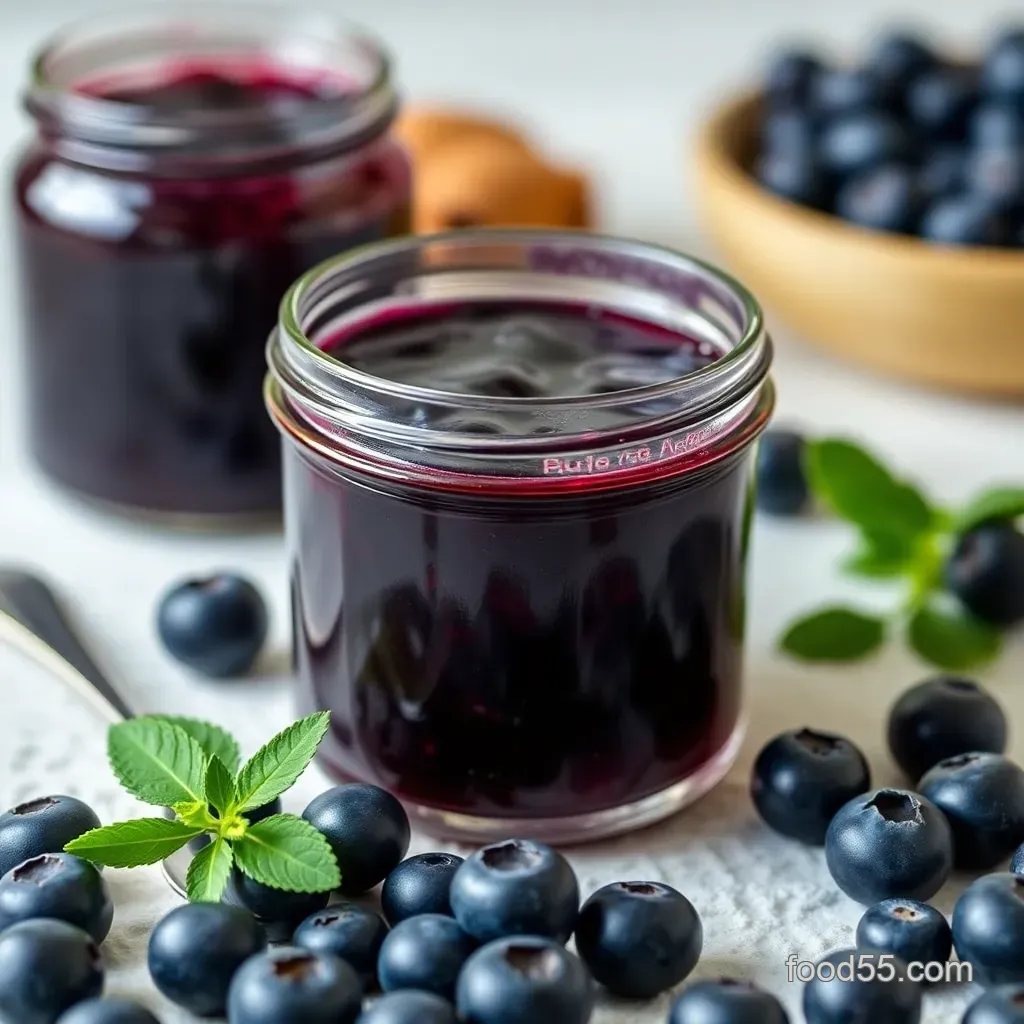
Why Homemade Blueberry Jam is Unbeatable
There's an unparalleled joy in tasting the sunshine of summer preserved in a jar. While store-bought options abound, nothing quite compares to the vibrant flavor and satisfying texture of homemade blueberry jam. It’s a culinary masterpiece that captures the essence of fresh blueberries, transforming them into a delightful spread with a deep purple hue and a perfectly balanced sweet-tart profile. Crafting your own blueberry jam allows you to control the ingredients, adjust the sweetness to your liking, and ensure every spoonful is packed with pure, unadulterated berry goodness. Beyond just a spread, homemade blueberry jam becomes a versatile ingredient for countless dishes, making it a staple in any kitchen.
The beauty of making blueberry jam from scratch lies not only in its superior taste but also in its simplicity. Many recipes, including classic methods like the one popularized by Mary Berry, prove that you don't need extensive culinary experience to create a truly delicious preserve. With just a handful of core ingredients and a little patience, you can have jars of this magnificent jam ready to enjoy throughout the year. It's a fantastic way to utilize a bountiful harvest of fresh berries during peak season or even make use of frozen ones, ensuring that the taste of summer is always within reach.
Essential Ingredients for the Perfect Blueberry Jam
Achieving the best blueberry jam starts with understanding the role of each ingredient. While the list is short, each component plays a crucial part in the jam's flavor, texture, and setting ability.
The Berries: Fresh vs. Frozen
The star of the show, blueberries, should be chosen with care. For the most complex flavor profile, opt for blueberries that are *just ripe*. These berries possess the ideal balance of acidity and tannins, contributing depth to your jam. Overripe blueberries, while still sweet, can develop leathery skins that impart an undesirable texture. If fresh blueberries aren't in season or accessible, high-quality thawed frozen blueberries are an excellent substitute. They retain much of their flavor and juice content, making them perfectly suitable for jam making.
Sweetener: Granulated Sugar
Granulated sugar is more than just a sweetener; it’s a critical component for preservation and helps the jam achieve its characteristic thick, glossy texture. The amount of sugar can be adjusted slightly to suit your preference, but it’s important not to reduce it too drastically, especially if you plan on canning the jam for long-term storage, as sugar acts as a natural preservative. A common ratio is 750g of sugar per 1kg of blueberries, striking a lovely balance between sweetness and the natural tartness of the fruit.
Acidity & Flavor Enhancer: Lemon Juice
Lemon juice is a powerhouse ingredient in blueberry jam. It plays a dual role: first, it enhances the bright, natural flavor of the blueberries, making them sing. Second, and crucially, lemon juice provides the necessary acidity to activate the naturally occurring pectin in the fruit, aiding in the jam's set. Even when using commercial pectin, lemon juice is vital for achieving that perfect, firm consistency and preventing a runny jam. It also contributes a subtle tang that beautifully balances the sweetness of the sugar and berries.
The Thickener: Pectin
Blueberries are naturally high in pectin, a complex carbohydrate that acts as a gelling agent. This means theoretically, blueberry jam can set without added commercial pectin. However, for a consistently thicker texture and a quicker, more reliable set, many recipes call for commercial fruit pectin. This naturally occurring starch, derived from fruits, ensures your jam achieves that desirable spoon-coating consistency every time. It's important to note that pectin helps with texture, not shelf life; proper canning techniques are what preserve the jam. If you choose to skip commercial pectin, your jam will likely still set, but it might be softer or more spreadable – a preference for some jam enthusiasts. When using commercial pectin, be sure to follow the specific instructions on the pectin package, as varieties (e.g., powdered vs. liquid) can differ in how and when they should be added.
A Touch of Water
A small amount of water, typically around 100ml for 1kg of berries, is sometimes added at the beginning of the cooking process. This helps the blueberries soften and release their juices without scorching before the sugar is introduced. It's a small but helpful step to ensure even cooking and juice extraction.
Mastering the Jam-Making Process: Step-by-Step
Creating delicious blueberry jam is a rewarding process that follows a series of straightforward steps. Attention to detail at each stage ensures a successful and delectable end product.
Preparation is Key
- Wash and Prepare Blueberries: Begin by thoroughly washing your fresh blueberries and removing any stems, leaves, or damaged berries. If using frozen, there's generally no need to thaw them beforehand; they can go straight into the pot.
- Sterilize Jars: This step is non-negotiable for safe, long-term preservation. You'll need about six half-pint (or similarly sized) jars. Wash them thoroughly with hot, soapy water, rinse well, and then sterilize them by boiling them in a large pot of water for at least 10 minutes, or by running them through a dishwasher's sanitize cycle. Keep the jars and lids hot until ready to fill.
Cooking the Fruit
Place your prepared blueberries and the initial amount of water (if using) into a large, heavy-bottomed saucepan. A heavy bottom helps distribute heat evenly and prevents scorching. Cook over medium heat, stirring occasionally, until the berries begin to soften and release their juices. This usually takes about 5-10 minutes. At this point, you can use a wooden spoon or a potato masher to gently mash some of the berries. This step is optional and depends on your preference: mash more for a smoother jam, or less for a chunkier texture.
Adding Sugar and Lemon Juice
Once the berries are soft and juicy, stir in the granulated sugar and lemon juice. Continue stirring over medium heat until the sugar has completely dissolved. It's crucial that all sugar crystals dissolve before the mixture comes to a full boil, as undissolved sugar can lead to a grainy jam. If you are using commercial pectin, follow the package instructions carefully regarding when to add it – some types are added with sugar, others later.
Bringing to a Rolling Boil
Increase the heat and bring the mixture to a rapid, rolling boil – one that cannot be stirred down. Boil vigorously for 10-15 minutes, or until the jam reaches its setting point. This rapid boil is essential for evaporating excess water and concentrating the sugars and pectin, which allows the jam to set.
Skimming the Foam
As the jam boils, foam may form on the surface. While harmless, this foam can make your finished jam appear cloudy. Skim it off with a spoon during the last few minutes of cooking for a beautifully clear and attractive preserve. For more detailed insights into quick jam making, explore our guide on Quick Homemade Blueberry Jam: 30-Minute Stovetop Recipe.
Achieving the Ideal Set: Pectin, Lemon & The Wrinkle Test
The perfect set is the hallmark of excellent blueberry jam. It's firm enough to hold its shape but soft enough to spread effortlessly. Understanding how to achieve this balance is key.
The Role of Pectin and Lemon
As discussed, blueberries contain natural pectin, and lemon juice helps activate it. Commercial pectin further ensures a consistent, thick set. The cooking process, especially the rapid boil, helps to break down the fruit and allows the pectin to form a gel structure with the sugar and acid. Without the right balance, your jam might be too runny or overly stiff.
The Chilled Plate (Wrinkle) Test
This traditional method is highly reliable for determining if your jam has reached its setting point:
- Before you start cooking, place a small ceramic plate or saucer in your freezer.
- When you suspect the jam is ready (after 10-15 minutes of rolling boil), remove it from the heat.
- Drop a small spoonful of hot jam onto the chilled plate.
- Let it cool for 30 seconds to a minute.
- Push the jam with your finger. If it wrinkles and doesn't run, it has reached its setting point and is ready to be jarred. If it's still too fluid, return the saucepan to the heat and boil for another 2-3 minutes, then re-test.
Using a Jam Thermometer (Optional but Recommended)
For an extra layer of precision, a jam thermometer can be a valuable tool. Jam typically sets at around 104-105°C (220-221°F). However, always cross-reference with the wrinkle test, as altitude and specific fruit composition can slightly alter the ideal temperature. Remove any foam from the surface for a clear, attractive jam before pouring into jars.
Tips for Storing and Enjoying Your Blueberry Jam
Once your delectable blueberry jam has reached its perfect set, the final steps involve proper storage and, of course, enjoyment!
Canning for Long-Term Preservation
To enjoy your homemade blueberry jam throughout the year, especially if making larger batches, proper canning is essential. After filling your hot, sterilized jars with hot jam, leaving about 1/4 inch of headspace, wipe the rims clean, secure the lids and bands, and process them in a boiling water bath canner. This involves immersing the filled jars in boiling water for a specified time (usually 10-15 minutes, adjusting for altitude). This creates a vacuum seal, preserving the jam safely. Once processed and cooled, check that the lids are sealed (the center should be concave and not flex when pressed). Unopened, properly canned jam can be stored in a cool, dark place for up to a year. Once opened, refrigerate and consume within a few weeks.
Versatile Uses for Your Homemade Preserve
The beauty of homemade blueberry jam lies in its incredible versatility. Beyond the classic breakfast applications, its pure blueberry flavor and balanced sweetness open up a world of culinary possibilities:
- Breakfast & Brunch: Spread generously on warm biscuits, flaky scones, buttered toast, muffins, pancakes, or waffles. It’s the quintessential accompaniment to any morning meal.
- Baking & Desserts: Use it as a luscious filling for cakes, cupcakes, tarts, and thumbprint cookies. Swirl it into yogurt parfaits or spoon it over vanilla ice cream for a simple yet elegant dessert. For more ideas on how to incorporate this preserve into your cooking, check out our article on Homemade Blueberry Jam: Versatile Preserve for Spreading & Baking.
- Savory Pairings: Don't limit it to sweet dishes! Blueberry jam can be a surprising and delightful addition to savory fare. Pair it with soft cheeses on a charcuterie board, or use it as a glaze for pork or poultry for a sweet and tangy contrast.
- Beverages: Stir a spoonful into sparkling water for a refreshing spritzer, or even use it as a base for creative cocktails.
- Gifting: Jars of homemade blueberry jam make thoughtful and cherished gifts for friends, family, and neighbors.
Conclusion
Making your own blueberry jam is a truly rewarding experience, yielding a preserve that far surpasses anything you can buy in a store. By carefully selecting your berries, balancing the sweetness with a touch of lemon, and understanding the role of pectin, you can achieve a jam with a perfect set, vibrant flavor, and beautiful color every time. This simple yet profound act of preserving not only captures the fleeting taste of summer but also provides you with a versatile, delicious staple that will bring joy to your kitchen throughout the year. So, gather your ingredients, embrace the process, and prepare to delight in the unparalleled taste of your very own homemade blueberry jam.
